← Back to projects
Time-bound High-intensity Innovation and Team work
Innovation under pressure across sensing, AI, and synthetic biology
Three award-winning team projects combining silent-speech hardware, early generative AI, computational storytelling, microscopy image analysis, and synthetic-biology manufacturing.
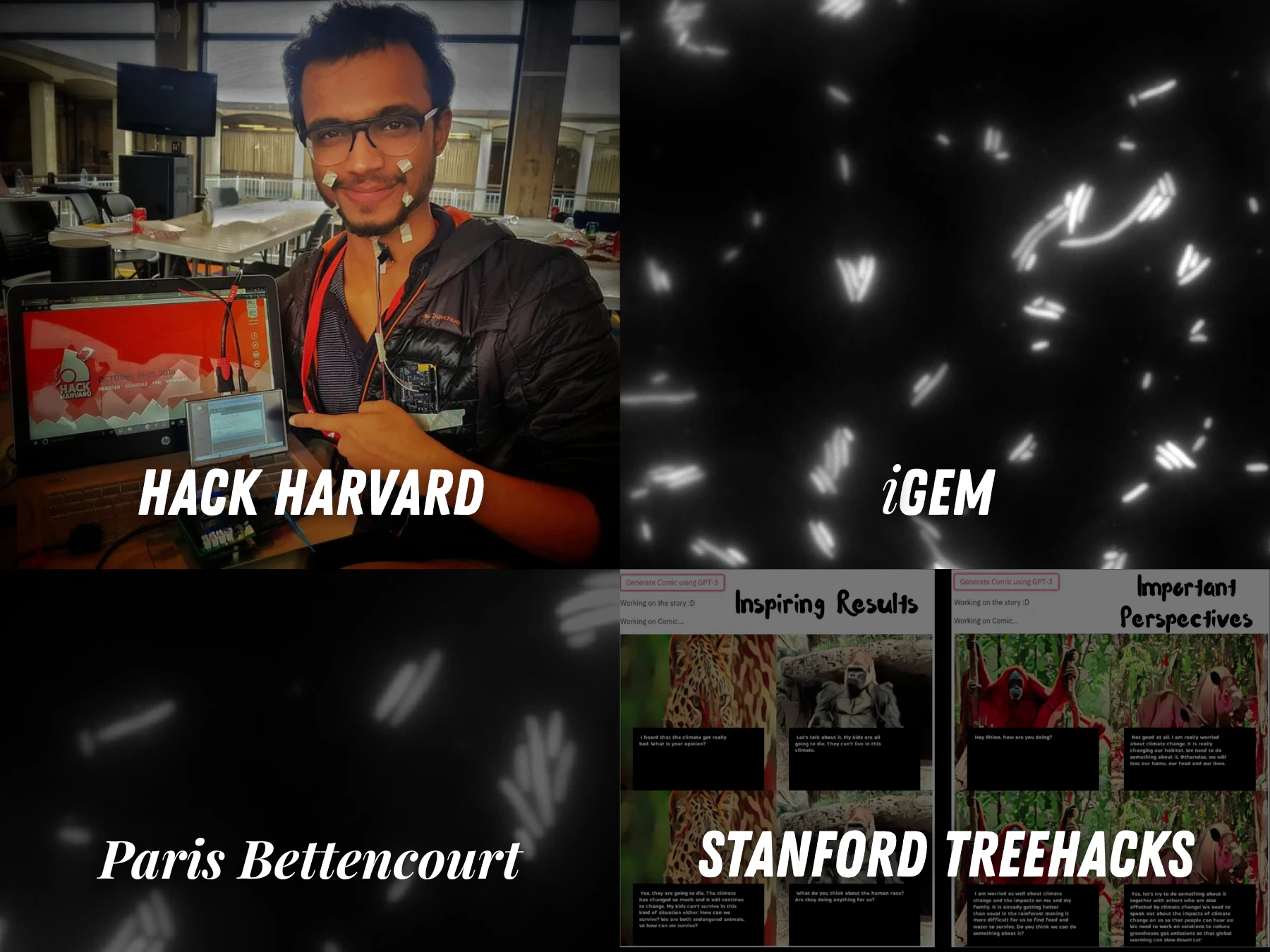
Technical Layer
Tools & Methods
- Magnetometer sensing
- Arduino 101
- Python
- OpenCV
- GPT-3
- CartoonGAN
- Streamlit
- Google Cloud Platform
My role
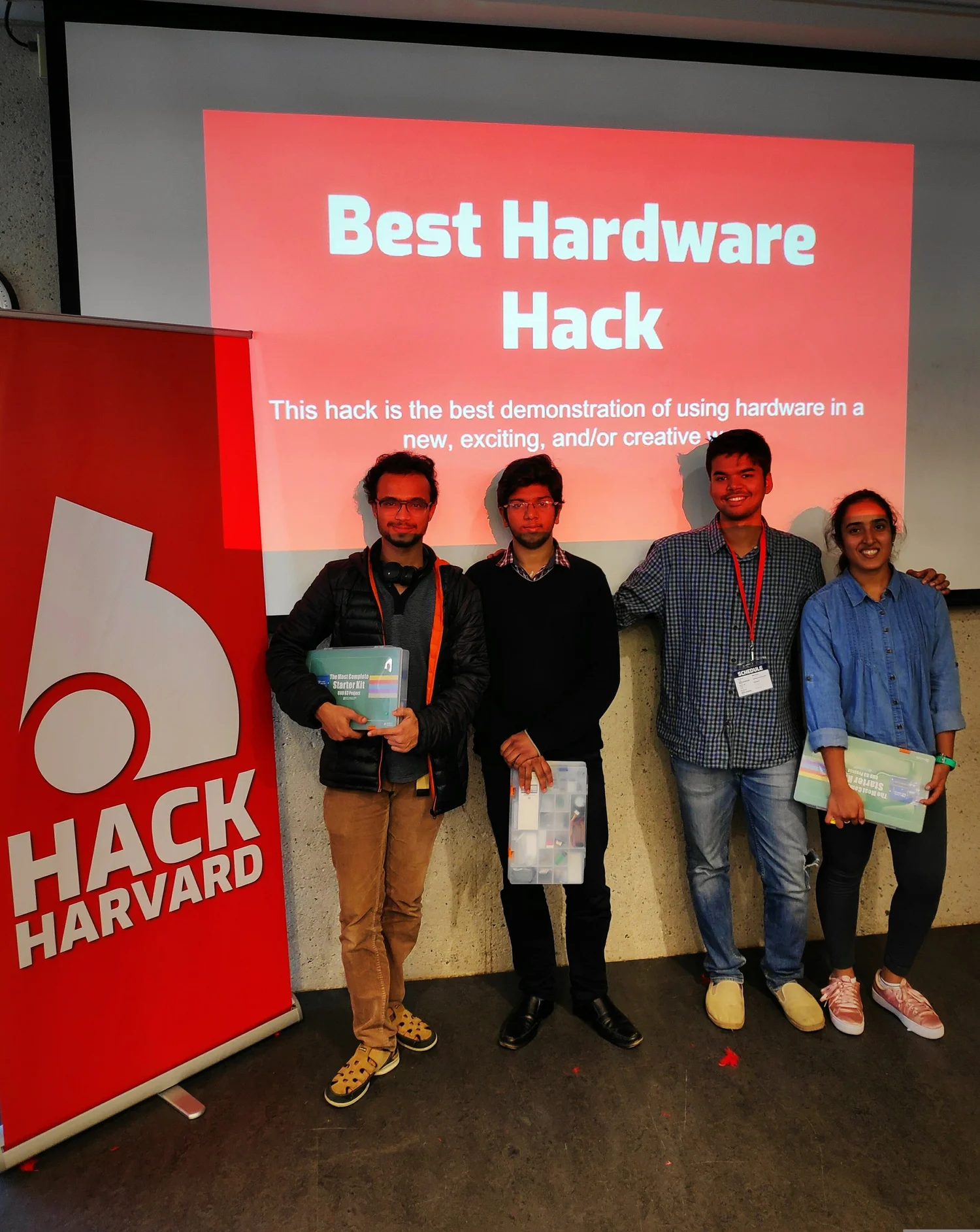
Across three interdisciplinary teams, I contributed to turning ambitious ideas into functioning technical systems. For MagneTalk, I worked on a magnetometer-based silent-speech and human–machine interface prototype. For Endangered Tales, I helped conceptualize and build the generative pipeline, integrating GPT-3 response steering, CartoonGAN, and deployment through Google Cloud Platform. As a part-time hardware and dry-lab member of the Paris Bettencourt iGEM 2021 team, I programmed an automated OpenCV-based microscopy workflow for identifying and counting mother cells and minicells.
Three domains, one working method
The projects emerged from very different fields: assistive communication, biodiversity storytelling, and synthetic-biology manufacturing. But the working method remained consistent: identify the essential signal, reduce the problem to a buildable system, learn unfamiliar tools quickly, and deliver an output that could be demonstrated, tested, and understood.
MagneTalk: silent speech through magnetic sensing
MagneTalk explored whether minute magnetic-field fluctuations associated with facial muscles and vocal activity could support communication without audible speech. The prototype focused initially on distinguishing vowel-related patterns and communicating simple needs through a wireless sensor interface.
From physiological sensing to assistive interaction
The concept was framed around situations in which conventional speech may be difficult or impossible, including facial paralysis and medical settings where patients cannot easily express their needs. It also suggested a broader human–machine interaction model in which subtle physiological activity could become an intentional control signal.
Endangered Tales: early generative AI for conservation
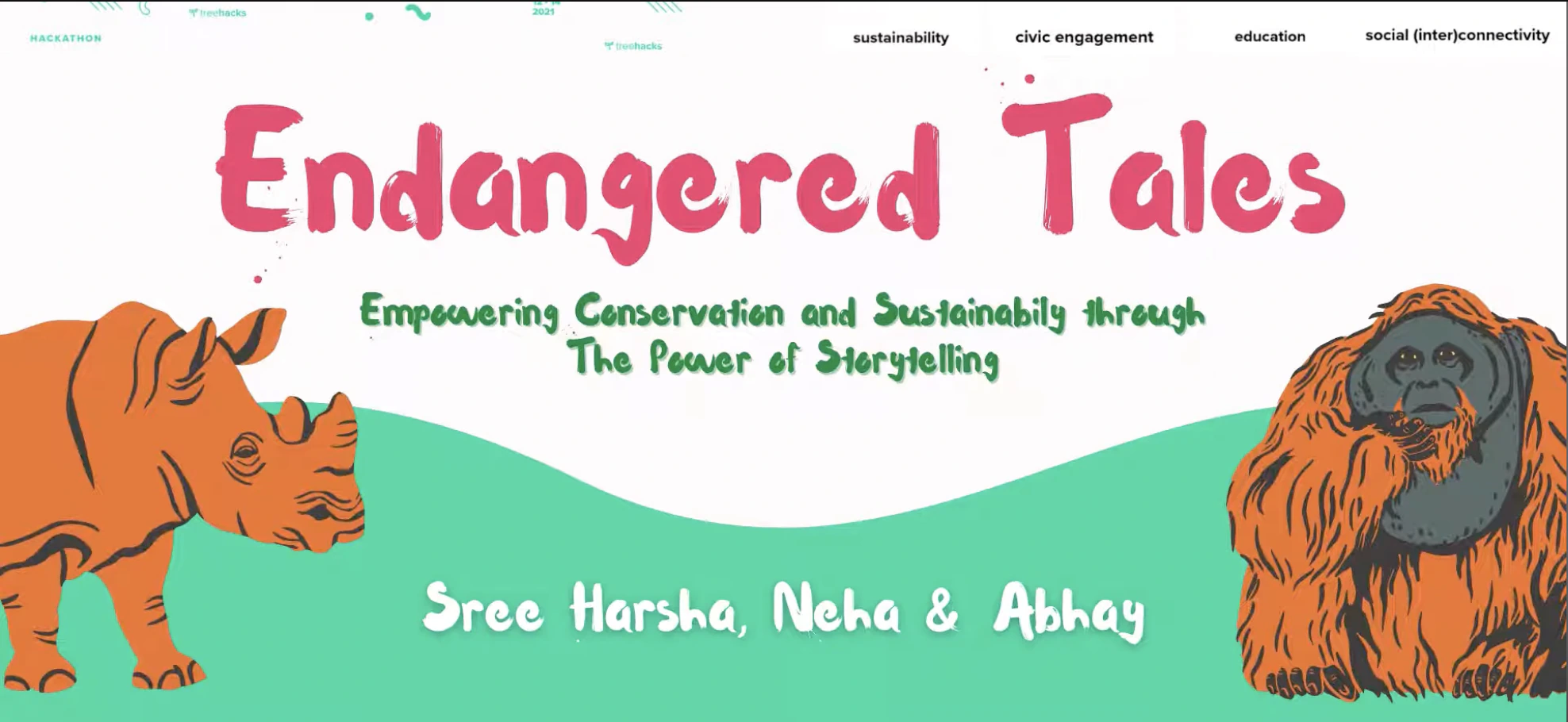
Endangered Tales generated comic-style conversations between critically endangered animals discussing climate change, global warming, biodiversity loss, and human responsibility. Users selected an environmental theme and two animals, after which the system generated both the dialogue and the accompanying stylized imagery.
Before generative AI became mainstream
In 2021, before conversational generative AI became a familiar consumer interface, we were already using GPT-3 as a creative engine. We steered it to write multi-character environmental dialogues, paired those conversations with CartoonGAN-stylized endangered animals, and assembled the outputs into an interactive storytelling pipeline.
The generative pipeline
The system connected user prompts, animal selection, GPT-3 response steering, image processing, CartoonGAN stylization, comic composition, Streamlit interaction, and deployment on Google Cloud Platform. The team moved from concept to a functioning live demonstration within the final phase of the hackathon.
iGEM: computational microscopy for biomanufacturing
The Paris Bettencourt iGEM project investigated minicells as a platform for safer and more distributed biological manufacturing. As a part-time hardware and dry-lab contributor, I focused on automating the analysis of fluorescent microscopy images so experimental samples could be characterised more consistently.
Automated cell counting with OpenCV
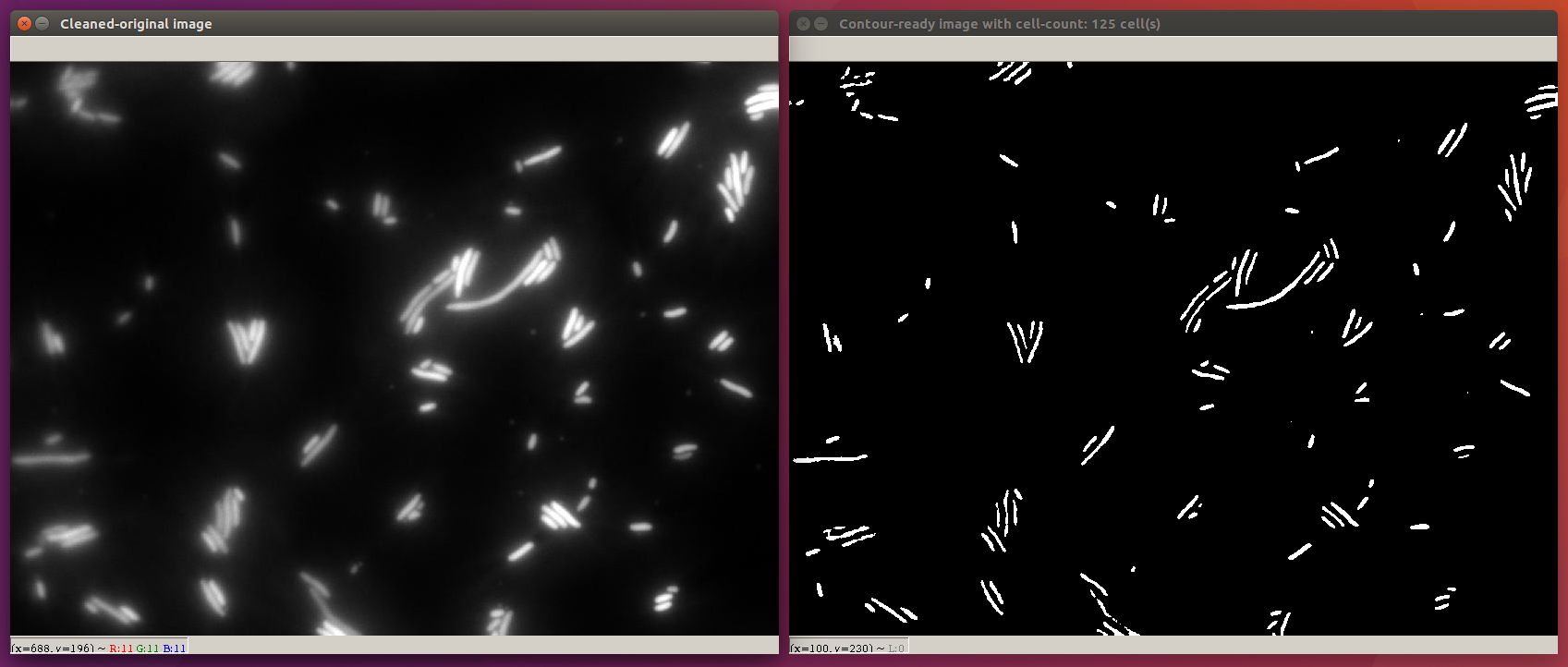
I programmed image-processing workflows for GFP microscopy images containing minicells and mother cells. The pipeline applied border stripping, greyscale conversion, sharpening, binary thresholding, Gaussian blurring, and final contour extraction. OpenCV contour mapping was then used to identify cell boundaries and return automated cell counts from the processed images.
Why these projects matter
Together, the projects demonstrate technical adaptability rather than allegiance to one tool or discipline. One began with magnetic-field measurements, another with an early large language model, and the third with fluorescent microscopy. Each required rapid learning, interdisciplinary collaboration, computational thinking, and the ability to connect technical implementation to a meaningful human or biological problem.
Primary outputs
Project outputs and code
Magnetalk Project DeckMagnetic flux sensing for silent speech · HackHarvard 2018View ↗︎Endangered Tales Project DeckEarly GPT-3 generative storytelling for biodiversity conservation · Stanford TreeHacks 2021View ↗︎iGEM Cell-Counting CodePython and OpenCV tools for automated microscopy image analysisView ↗︎iGEM Dry-Lab DocumentationImage analysis, automated cell counting, modelling, and data processingRead ↗︎
Featured in
Coverage
Continue Exploring
Explore the wider body of work.
Further projects span physiological computing, computational neuroscience, embodied systems, and interdisciplinary engineering.