← Back to projects
Global Community Bio Leadership Fellow · Neurotechnology · Collective Intelligence
Global Community Bio - Leadership fellow
A Global Community Bio Summit project presenting neurotech, community biotechnology, and collective-intelligence approaches to mental health.
Technical Layer
Tools & Methods
- Global leadership
- Wearable EEG
- Muse BCI
- Android
- Audio feedback
- Collective intelligence
My role
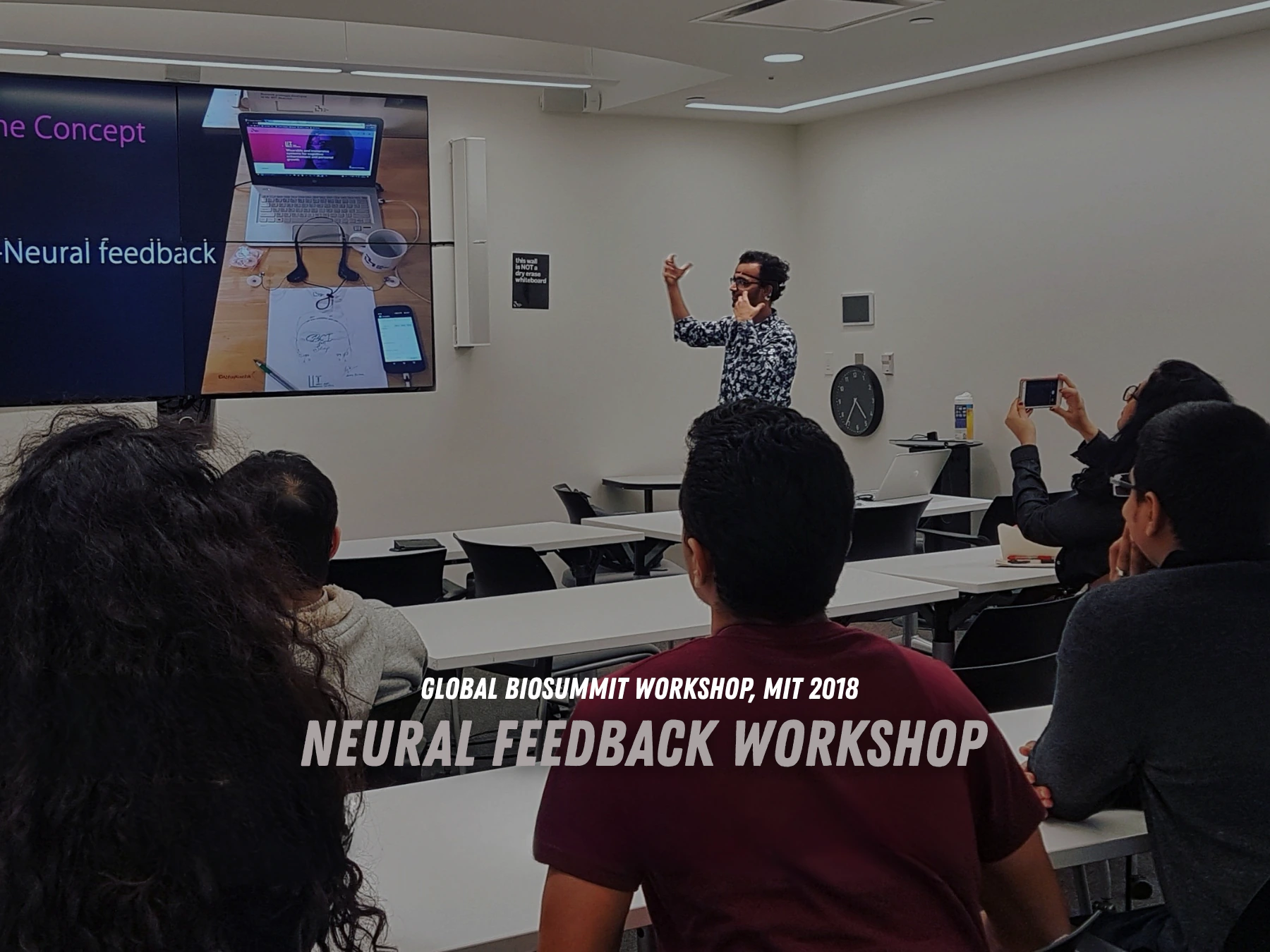
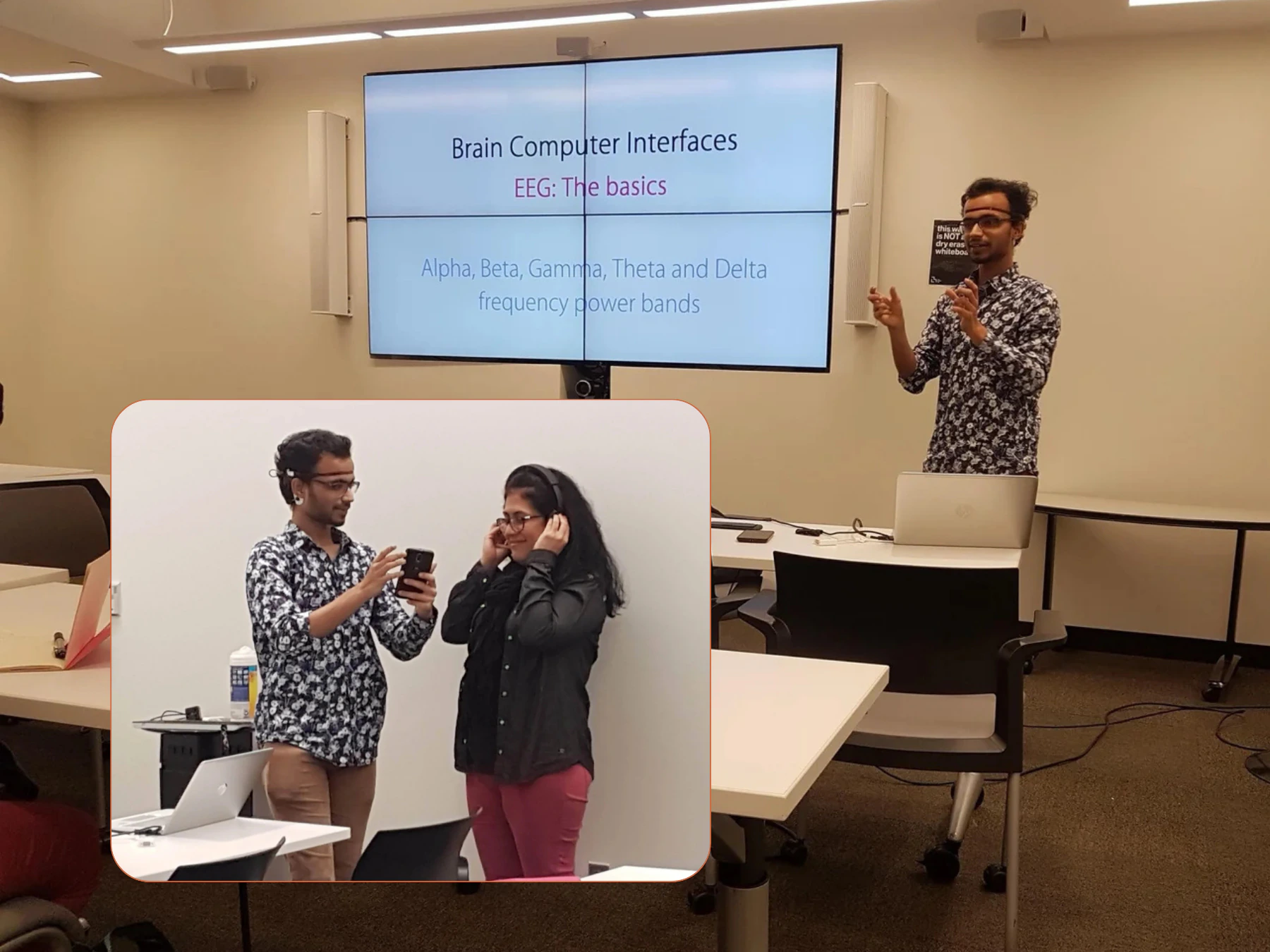
I developed and demonstrated an Android application for real-time audio feedback from wearable EEG, using alpha-band power to generate a brain-music feedback loop. I presented the work as an Audio-Neural Feedback workshop at the Global BioSummit 2018, became one of the core organizers of the Summit. I was later awarded with the Global Community Bio Fellow in 2020, and contributed as part of the MIT Supermind Contributors in the MIT-Takeda Superminds Fellows Program.
The fellowship
The Global Community Bio Fellowship brought together selected leadership fellows from across countries to explore biotechnology, community, ethics, and public health through a global leadership lens. For me, this became a bridge between physiological sensing, public communication, and systems-level health thinking while collaborating with researchers in the industry.
The leadership training
The fellowship included training in global leadership with Abel Cano and Prof. Marshall Ganz from Harvard Kennedy School. This shaped the project beyond technology: the focus was not only on building tools, but on learning how communities organize around health, responsibility, and shared futures.
The neurotechnology workshop
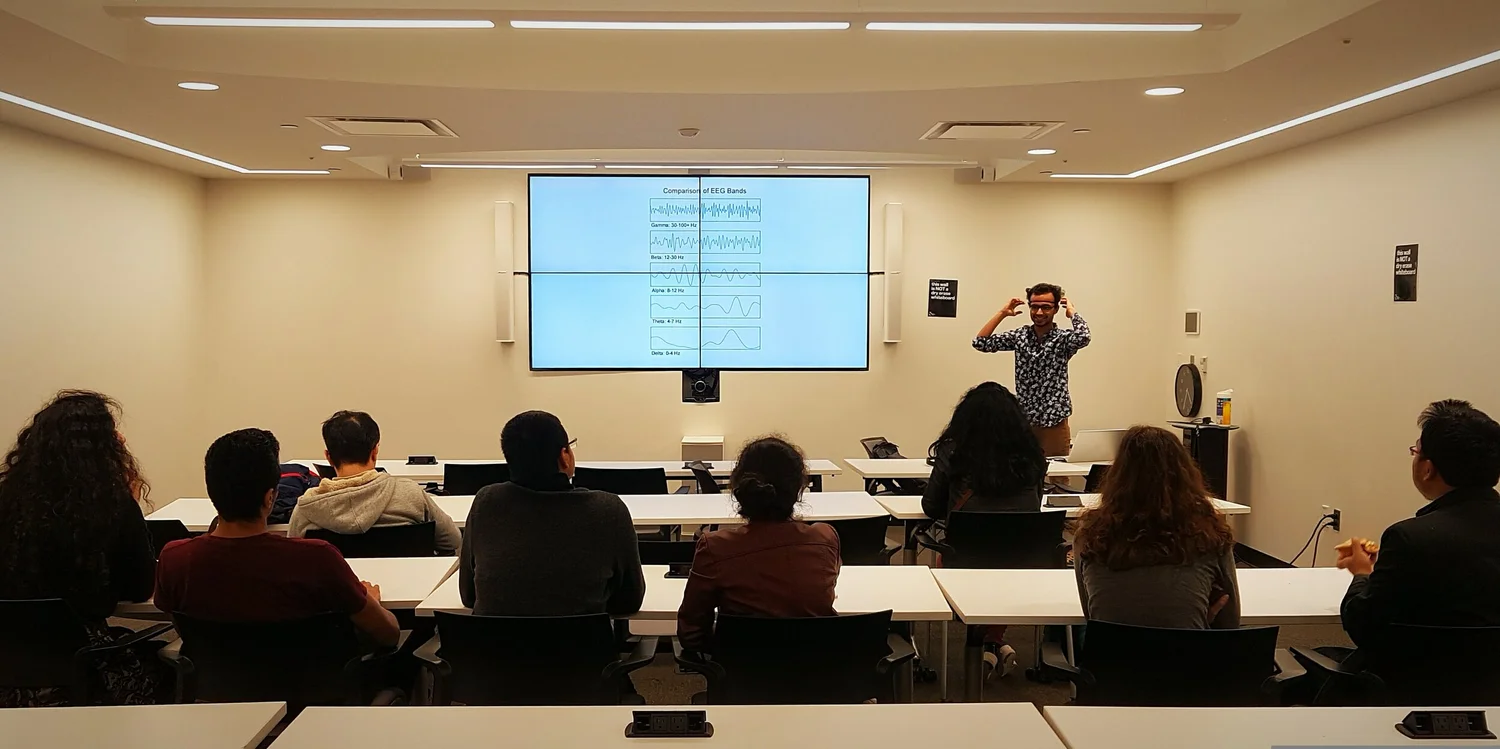
As part of the Global Biosummit 2018, I presented Audio-Neural Feedback at Global BioSummit: a wearable EEG demonstration where alpha-band activity was translated into real-time sound. The goal was to make neural self-regulation tangible, so participants could listen to changes in physiological state rather than only view them as abstract signals.
The collective-intelligence layer
The later MIT/Takeda Supermind Program extended the same concern into systems thinking: how networks of people and machines could support mental-health care, early detection, engagement, and well-being at scale.
Why this matters
This project connects global leadership, neurotechnology, public bio-design, and collective intelligence. It shows a through-line from sensing the individual nervous system to designing systems that support collective health and well-being.
Primary outputs
Primary outputs
Featured in
Coverage
Continue Exploring
Explore the wider body of work.
Further projects span physiological computing, computational neuroscience, embodied systems, and interdisciplinary engineering.